
Curdled Cream Sauce
Your cream sauce separated into greasy liquid and white curds because the cream was overheated or an acid was added too quickly. These steps re-emulsify the sauce without starting over.
Part of sauces cooking fixes and soggy food fixes .
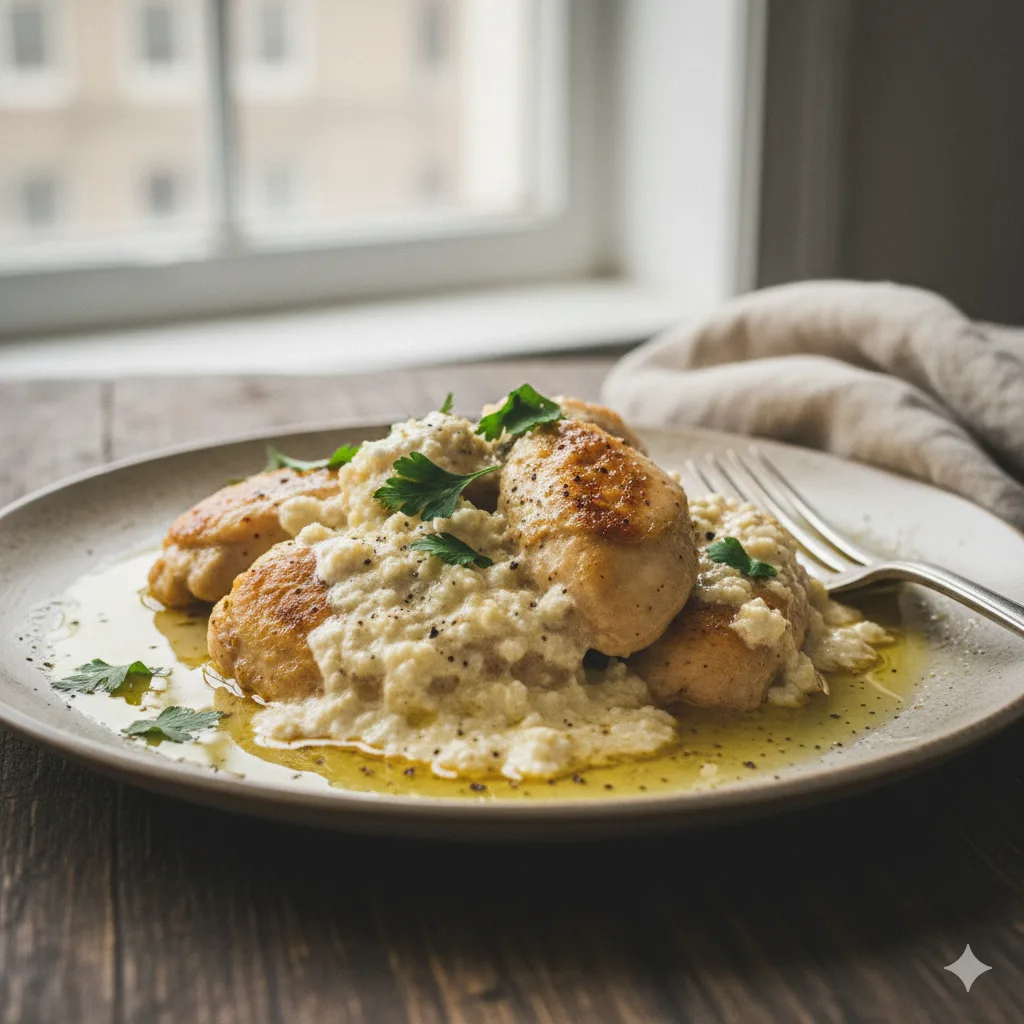
Ingredients on hand
- curdled cream sauce
- 3 tablespoons warm whole milk
- 1 tablespoon cold unsalted butter
- 1/2 teaspoon Dijon mustard
Why it happened
Cream is an oil-in-water emulsion stabilized by milk proteins (casein) and milk fat globule membranes. When overheated above 180F or shocked by acid (wine, lemon, tomato), the casein proteins denature and clump together, releasing fat. Mustard contains lecithin, a powerful emulsifier that inserts itself between fat and water molecules. Cold butter added to a cooling sauce creates new small fat droplets with intact milk protein coatings, essentially seeding a new emulsion.
The fix
- 1 remove the pot from heat and let it cool for 1-2 minutes
- 2 add 3 tablespoons warm milk and whisk vigorously for 30 seconds to break up curds
- 3 whisk in 1 tablespoon cold butter and 1/2 teaspoon Dijon mustard; the lecithin in mustard and the cold butter help re-form the emulsion
If it's still wrong
- Pour the sauce into a blender and blend on high for 15 seconds; mechanical shear force can re-emulsify a mild break.
- Strain out the curds, return the liquid to the pan, and whisk in 2 tablespoons cream cheese until melted and smooth.
Prevent next time
- Keep cream sauces below 180F; never let them boil.
- When adding wine or lemon to a cream sauce, reduce the acid separately first, then add the cream to it.
- Use room-temperature cream, not cold from the fridge, to avoid thermal shock.
Notes
Why this works
A cream sauce is a fat-in-water emulsion held together by milk proteins and phospholipids. When heat or acid disrupts this, fat pools separately and proteins clump. The rescue works on multiple levels: cooling stops further protein denaturation, warm milk adds fresh intact casein to stabilize new droplets, cold butter introduces small solid fat particles coated in undamaged milk-fat-globule membrane, and mustard lecithin is an amphiphilic molecule (one end loves water, the other loves fat) that bridges the two phases. Vigorous whisking mechanically breaks fat back into tiny droplets small enough for these emulsifiers to coat.
Substitutions
- Dijon mustard → 1 egg yolk (whisk into a small amount of cooled sauce first, then combine)
- whole milk → cream
More soggy fixes
Other sauces fixes